
Small metal details with a large job
Lead and metal covered
We assess and repair both traditional leadwork and other metal flashing.
Surroundings inspected
We check adjacent masonry and coverings before deciding how to repair the joint.
Movement allowed for
We use suitable laps and fixings so temperature changes do not strain the detail.
Protect the joins rain tries to exploit
Flashing directs water away from the places where a roof meets a chimney, wall, valley or penetration. When an edge lifts, a joint opens or metal splits, rain can slip behind the covering and reach the structure. We undertake roof flashing repair in Coatbridge for both lead and other metal details. Signs of trouble include corrosion, staining, loose sections and damp near a junction. We inspect the existing flashing alongside the masonry and surrounding roof covering because movement or deterioration in one part can undermine the others. We then explain whether resealing, local repair or renewal is appropriate.

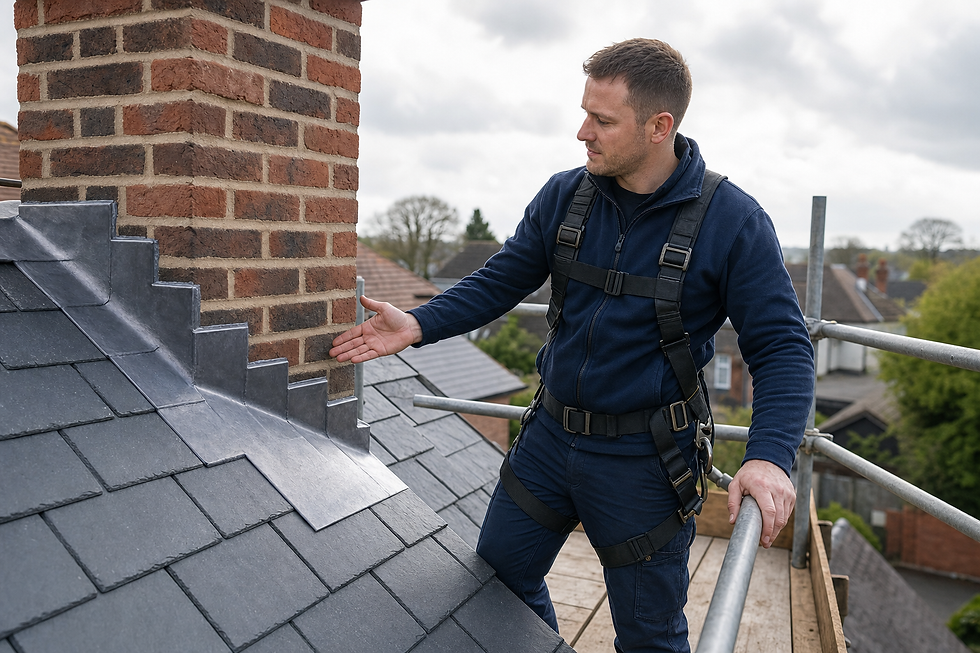
Shaped and fixed for lasting movement
Lead and metal expand and contract as temperatures change. Durable flashing needs the correct shape, laps and fixings, with enough allowance for that movement. We remove defective material where needed, prepare the junction and form the replacement detail so water sheds over the roof rather than behind it. Chimney leadwork receives particular care because several roof planes and masonry faces can meet around one stack. We inspect accessible soakers, aprons and side details, then restore a watertight connection without overlooking the condition of nearby pointing or coverings.
Frequently asked questions
How can we tell if roof flashing has failed?
Look for lifted edges, cracks, corrosion, open joints or staining near a roof junction. Indoor damp beside a chimney or wall can also point to flashing, although we inspect before confirming the cause.
Can damaged lead flashing be repaired locally?
Sometimes. A sound detail with a limited defect may suit a focused repair. Where lead is badly split, poorly fixed or failing across a longer junction, renewal may provide the more durable result.
Why does chimney flashing need several pieces?
A chimney passes through a sloping roof and creates different water paths around its sides. Aprons, soakers and side or back details work together to guide rain onto the covering and away from the stack.